
From prototyping to a lightweight-design centre
The Eichelhardt site goes back to a foundry for light-metal casting established in 1939, which Stolfig acquired in 2015. Our own company history begins in 1986.
- 1986Founded for development and prototyping.
- 1987Design and development of lightweight projects in aluminium.
- 1996Start of research and development with magnesium.
- 2001Own intellectual property for magnesium material and manufacture.
- 2006Small-series production of magnesium sheet and profiles.
- 2010Wide magnesium sheet from the extrusion process.
- 2012Die casting in series with aluminium and magnesium parts.
- 2015Acquisition of the Eifelwerke in Eichelhardt.
- from 2018Expansion into a lightweight-design centre: sand casting, die casting, profiles, sheet metal and welded assemblies.
- 2026Thin magnesium sheet as an in-house development in pilot production.
Specialization in magnesium
Magnesium makes demands that other structural materials do not: adapted wall thicknesses, suitable joining technology and corrosion protection agreed early. Ignore these points in the part, and you risk scrap or rework.
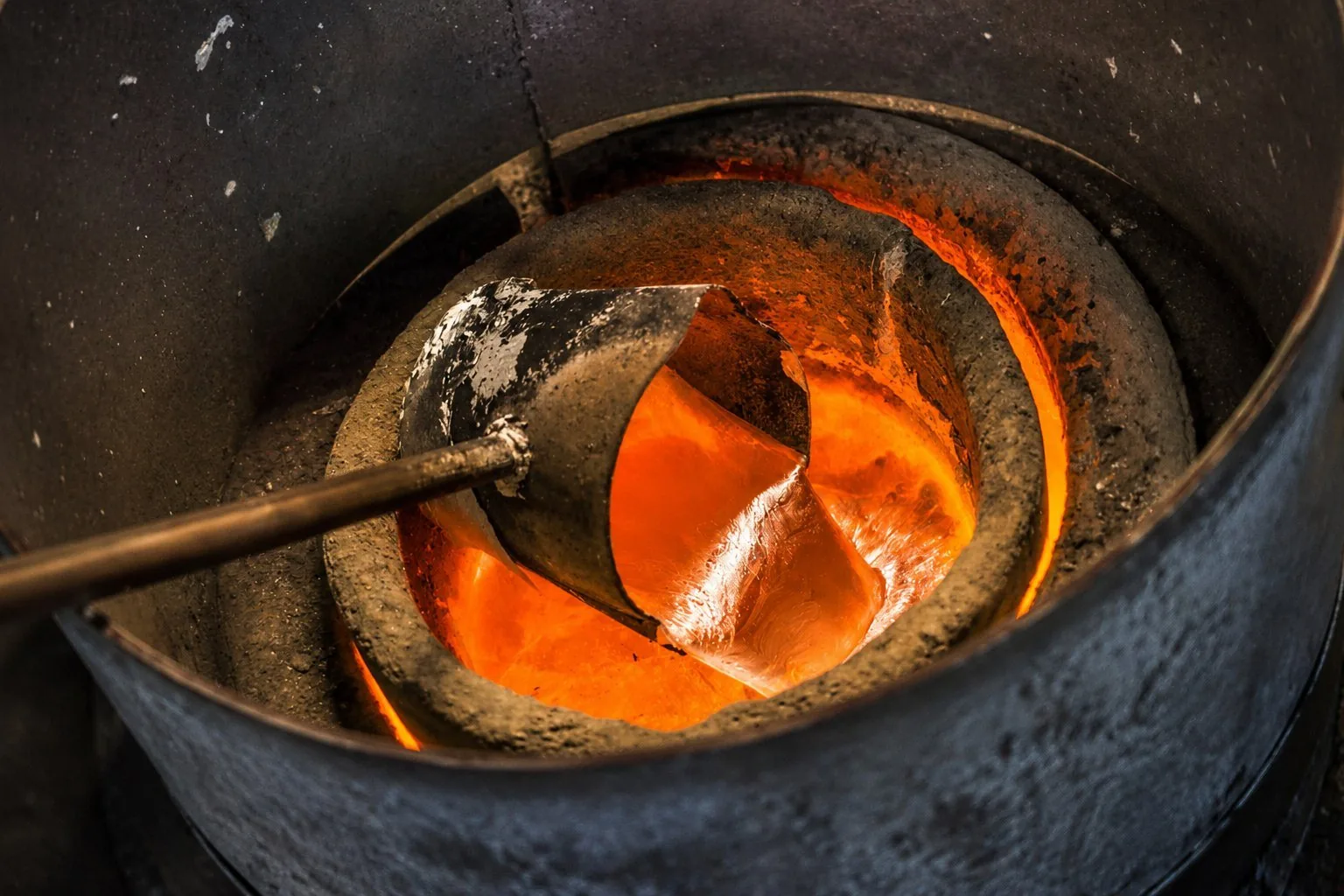
Stolfig has worked with magnesium since the early 1990s — having started when almost no one wanted it industrially, and stayed with it. Over these three decades, the necessary processes have grown up in-house: sand casting, die casting, extrusion, magnesium sheet and welding, including tool and fixture making. For weight-critical parts, magnesium is the most efficient structural material when correctly designed. The breadth of processes lets us choose the right one for each part — not the one that happens to be available.
A manufacturing partner, not a design office
Stolfig takes on manufacture, joining technology and the design-for-manufacturing adaptation of the part. One thing we deliberately do not offer: engineering in the sense of design ownership, crash simulation or material release. These remain with the customer or their engineering partner. This split sets responsibilities from the outset — and matters for supplier assessment, because you know exactly what scope Stolfig covers and what it does not.
If a part still needs an engineering loop — for layout or material release, say — we flag it early and name suitable engineering partners where needed.