What we manufacture — Five processes. One point of contact.

Magnesium parts in five industrial processes.

From prototype to series — made at our own sites in Germany and China.

You give us the design data, we assess manufacturability, adapt the part for manufacturing where needed, and take on tool making and production in-house. Joining technology — welding, fastening, dissimilar joints with aluminum or steel — is part of the part manufacture.

Sand casting / gravity die casting

Eichelhardt, Germany. Magnesium and aluminum sand casting in our own production. Parts up to 1.2 m. From a batch size of one.

Sand casting is the economical process at low to medium quantities — and for parts whose geometry would be too complex or too large for die casting. Cheaper tools, lower initial investment, part quality holding up to series launch.

When sand casting fits

  • Prototypes and initial samples for part release
  • Small series into the low four-figure range per year
  • Complex, thin-walled geometries or undercuts
  • Parts up to about 1.2 m

Materials

Mg alloys: AZ91, AM50, AM60, on request ME100, RZ5. Al alloys: AlSi10Mg, AlSi9Cu3(Fe), ADC-12, AlSi7Mg0.3.

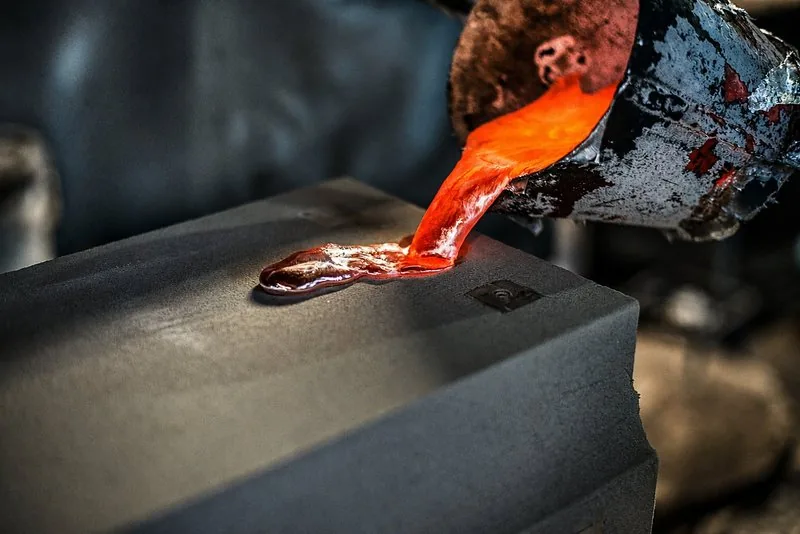
Sand casting — pouring into the sand mold
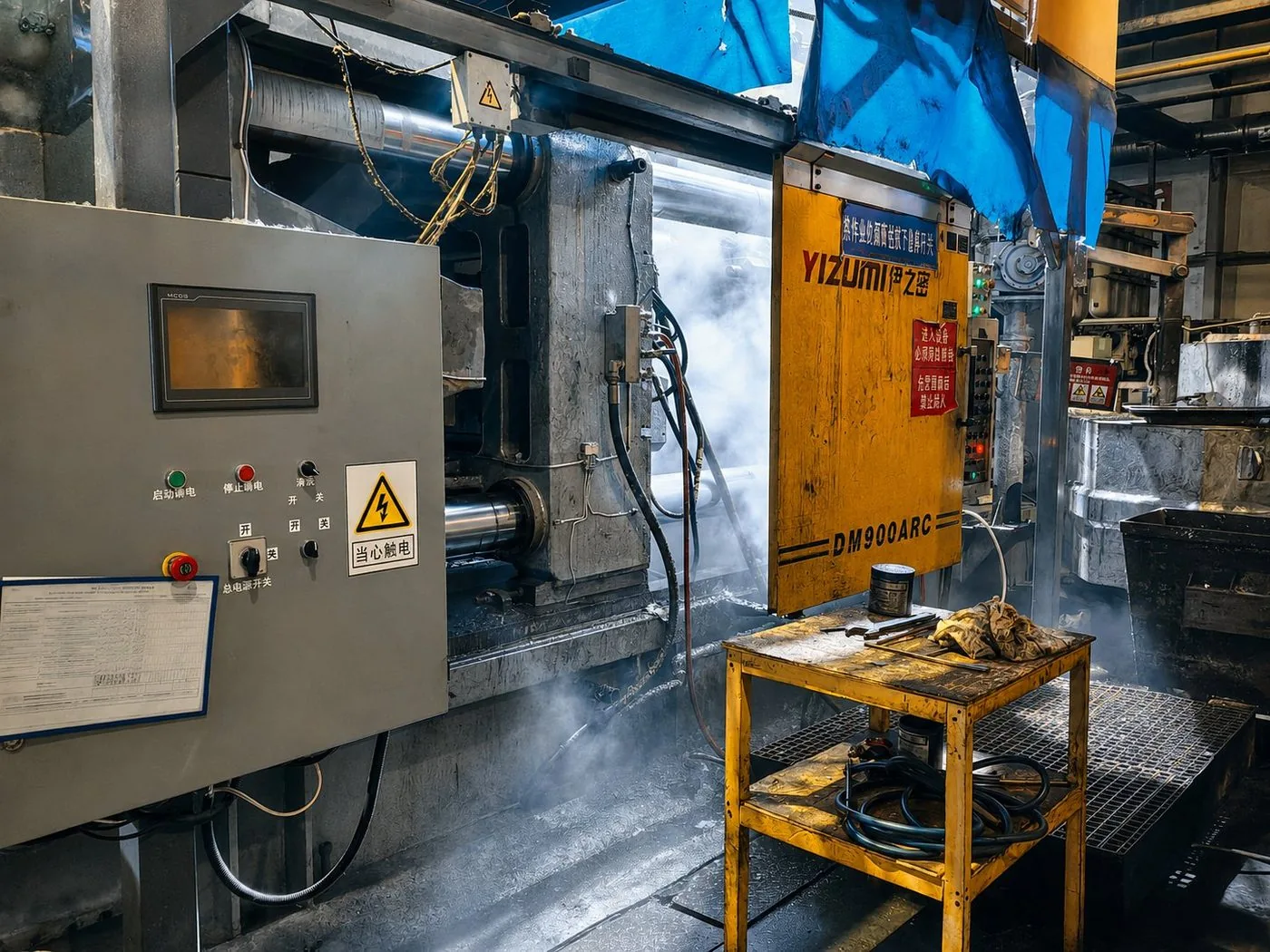
Die casting — magnesium die casting cell at the Shandong plant

Die casting

Shandong, China. Magnesium and aluminum die casting at industrial scale. For medium to high quantities.

Die casting is the process of choice for series quantities with demanding tolerances and consistent part quality. A machine fleet from compact machines to large machines for structural body parts.

Machine classes

  • Compact parts (sensor housings, brackets, consoles): 220–400 t
  • Functional Mg parts (steering-wheel armatures, seat components): 650–1200 t
  • Structural body parts (cross-members, front-end carriers): up to 2500 t

Machine sizes and availability on request. We will send you the technical data sheet with machine list, clamping forces and part dimensions.

Extrusion

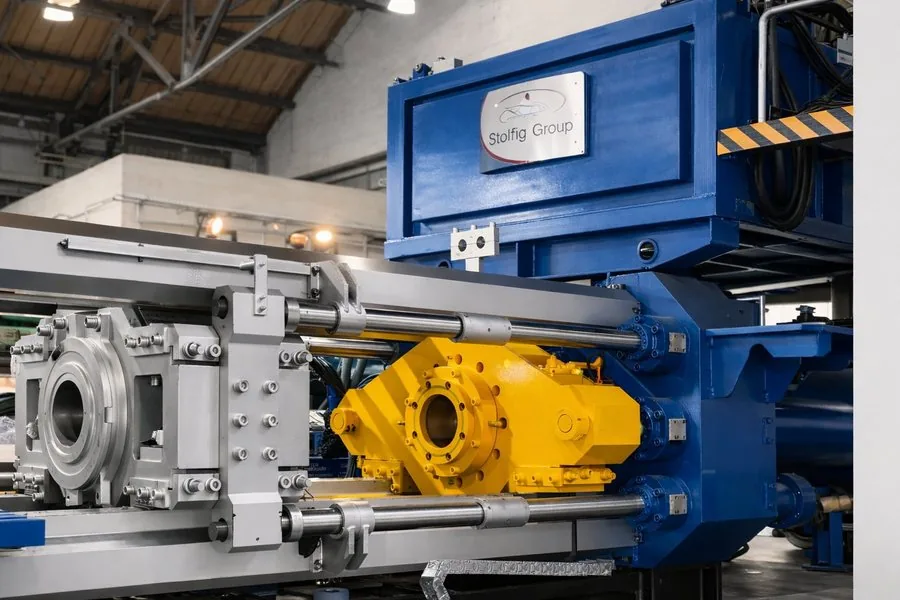
1,000 t extrusion press in Eichelhardt — for prototypes and small series. Extended capacity in Shandong — for series and larger cross-sections.

Extrusion is the process for long parts with a constant cross-section — profiles, tubes, custom cross-sections. With magnesium we use it not only for profiles, but also as the basis for magnesium sheet via warm-on-warm extrusion.

Materials

Mg alloys: AZ31, AZ63, MnE21 and others. Al alloys: Al6061, Al6063, AW6060. Larger aluminum profiles available through partner plants.

Quantities

Prototype and small series: Eichelhardt. Series: Shandong.

Extrusion press with Stolfig Group line
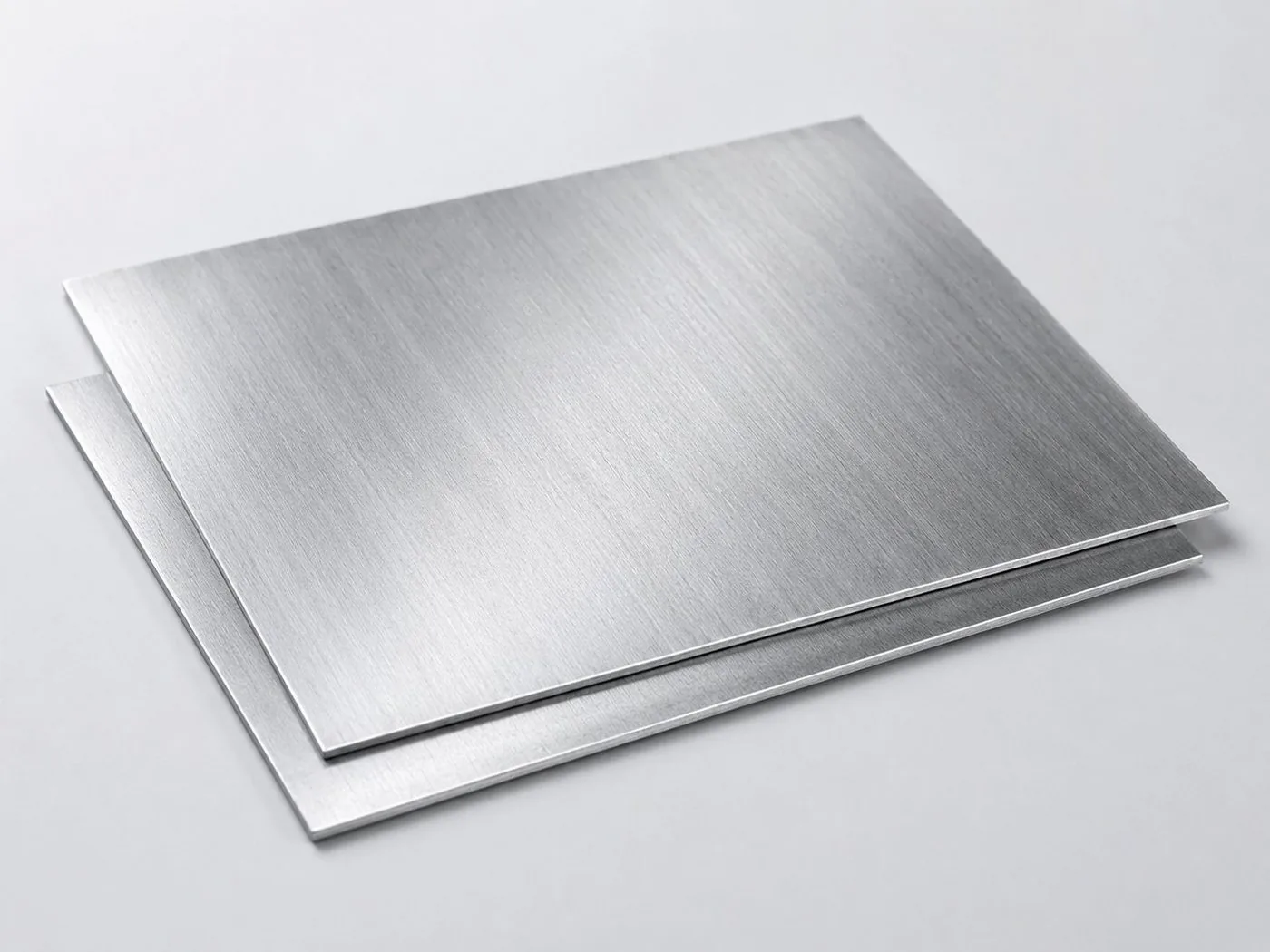
Thin magnesium sheet — panels from pilot production

Magnesium sheet (in-house development)

Eichelhardt, Germany. Pilot line for magnesium sheet via the warm-on-warm extrusion process. In operation since 2026.

Magnesium sheet has so far been produced almost exclusively by energy-intensive, multi-stage rolling. We have taken a different route: magnesium is extruded in a single step and split open in a hollow die — straight to sheet, without multi-stage rolling. The result is a markedly shorter process chain, lower energy input and a surface that is often directly usable.

Thickness
0.5 – 4 mm
Width
up to 1,000 mm
Material
AZ31 and other Mg alloys
Surface
suitable for B-surfaces
Status
Pilot production since 2026

Welding

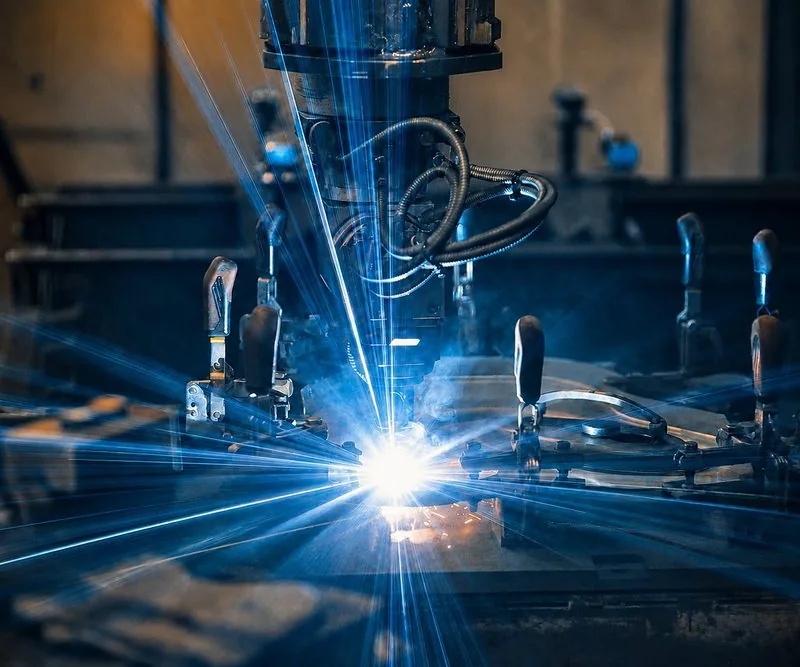
At Stolfig, welding is a manufacturing process and a service in its own right. We take on welding work for magnesium, aluminum and steel, as well as for complete assemblies.

We choose the process not as a blanket rule but to suit material, wall thickness, geometry and function. For magnesium, controlled heat input is decisive, especially with thin sheet and dissimilar joints.

Processes

CMT (Cold Metal Transfer), MIG, TIG, laser, robotic, friction stir and stud welding. For single-grade magnesium joints we use MnE21 welding wire from our own production.

Laser welding with arc

Joining technology and finishing — part of the part manufacture.

Magnesium parts are rarely single pieces. They are bolted, welded, bonded, riveted or joined in mixed-material construction with aluminum and steel. We bring this joining technology into every part — as part of the manufacture, not as a special service.

In-house

  • Welding: CMT, MIG, TIG, laser, robotic, friction stir, stud
  • Mechanical joints: self-pierce riveting, bolting
  • Dissimilar joints Mg–Al and Mg–steel with matched welding and brazing processes
  • MnE21 welding wire from our own production (1–5 mm)

Finishing

  • CNC machining (milling, turning, drilling) as a follow-on process to casting
  • Powder coating in-house (moderate corrosion requirement)
  • Through partners: Oxsilan® conversion coating (magnesium-specific, automotive-grade) and e-coat plus powder coating for visible surface parts
  • Other coatings on request

How an order runs with us.

01

Request & feasibility

Assessment within a few working days of whether, and in which process, we can manufacture.

02

Design review

You send 3D data. We assess manufacturability and propose adjustments where needed.

03

Tool making & initial sample

Tool built in-house, prototype for validation.

04

Series

Handover to series production at the chosen site.

For parts that still need layout, crash simulation or material release, we flag the necessary engineering loop early — and are glad to recommend suitable engineering partners from our network.

A part in mind?

We assess manufacturability, process selection and quantity economics within a few working days.

Request a part